
Midday is usually the weakest window of the trading day for directional options entries, so cut your size or skip new short-dated buys between roughly 11:30 AM and 2:00 PM ET. Save aggressive directional plays for the open sweet spot or power hour, and use midday for premium selling, position management, or research instead.
TL;DR:
- Midday trading for options is risky due to low volume, tight ranges, and theta decay, making it best to focus on premium selling and position management instead.
- The greatest intraday activity occurs from 9:30 to 11:00 AM ET and 3:00 to 4:00 PM ET, with liquidity and volatility peaking during these windows.
- About 60 to 75% of a daily trading range often occurs by noon, limiting potential moves and increasing the risk of losses if entering trades during midday.
- Avoid buying short-dated calls or puts between 11:30 AM and 2:00 PM ET due to unfavorable spread widening, low volatility, and the rapid decay of time value.
- Using pre-market analysis and AI-driven midday scans can help traders avoid impulsive midday trades and focus on high-probability setups during peak activity periods.
Table of Contents
- What Are the Best Times to Trade Options Each Day?
- Why Does Midday Trading Behave Differently for Options?
- Which Options Strategies Fit Each Time of Day?
- How Should You Manage Risk on a Midday Trade?
- How Does Morningoptions Help You Avoid Forced Midday Trades?
- What I've Learned About Sitting Out Midday
- Turn Midday Downtime Into a Research Advantage
- Sources
What Are the Best Times to Trade Options Each Day?
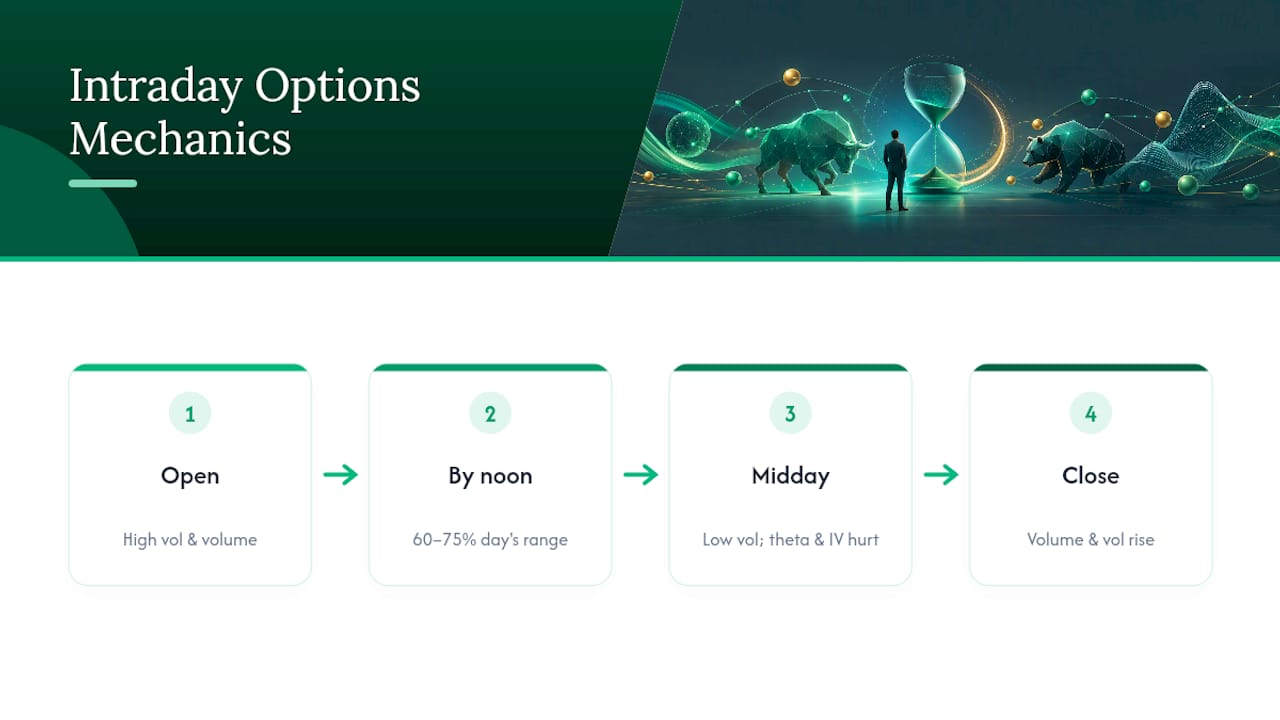
The trading day splits into five distinct windows, and treating them as interchangeable is how traders bleed money to theta and bad fills. Volume, spread width, and realized volatility swing hard from one window to the next, and options amplify every one of those swings.
- Pre-market (before 9:30 ET): Thin quotes, wide spreads on almost everything except mega-cap names. Useful only for scanning news and earnings catalysts, not for execution.
- Open sweet spot (9:30–11:00 ET): The day's highest volume and widest true range. Momentum and breakout strategies thrive here because liquidity is deep enough to enter and exit fast. Best suited to traders who can watch the screen closely for the first 30 to 60 minutes.
- Midday lull (11:30 AM–2:00 PM ET): Volume drops sharply, ranges tighten, and price often just drifts. This is the window most retail traders should trade smaller or not at all.
- Afternoon rebuild (2:00–3:00 PM ET): Volume starts climbing back as institutional desks reposition ahead of the close.
- Power hour (3:00–4:00 PM ET): The second liquidity peak of the day, often driven by rebalancing flows and late headline reactions. Good for quick 0DTE management and final directional pushes, less forgiving for beginners.
For SPY and other liquid index products, the two strongest stretches are 9:45 to 11:00 AM ET and 3:00 to 4:00 PM ET, and that pattern holds across most actively traded underlyings.
Why Does Midday Trading Behave Differently for Options?
Intraday volume and volatility follow a well-documented U-shaped curve: high at the open, low through midday, rising again into the close. That shape matters more for options than for stock because you're managing two clocks at once, price and time, and midday punishes both.
Roughly 60 to 75% of a typical day's range often prints by noon, according to SPY-focused intraday analysis. That leaves a compressed remainder for the rest of the session, which means the directional move you're hoping for midday has often already happened before you clicked "buy."
Theta decay doesn't pause for lunch. A short-dated contract loses value every minute you hold it, and when price stalls in a tight midday range, that decay isn't offset by favorable movement. Implied volatility often eases into midday too, so a long option can lose value from both time decay and a shrinking vol premium simultaneously.
Midday quiet doesn't mean midday is safe. A single large block trade can still move the tape. Wells Fargo pointed to one roughly $31 million options transaction that helped fuel a midday S&P jump, proof that dealer hedging flow and large prints can override the calm you'd otherwise expect.
Which Options Strategies Fit Each Time of Day?
Matching the strategy to the window matters as much as picking the right ticker. Here's how to think about it hour by hour.
- Open sweet spot, 9:30 to 11:00 AM ET. Momentum plays, breakout entries, and quick directional debit spreads work because volume supports fast fills at reasonable spreads. This is also when overnight catalysts, earnings, and economic data typically resolve into real price action.
- Midday, 11:30 AM to 2:00 PM ET. Favor premium selling. Defined-risk credit spreads, iron condors, and covered calls suit range-bound, low-volatility conditions far better than buying calls or puts outright. A small mean-reversion scalp can work, but only when volatility structure confirms compression, not on a hunch. Options strategies like straddles and strangles that need a big move are the wrong tool for a window that historically doesn't deliver one.
- Power hour, 3:00 to 4:00 PM ET. Liquidity returns, so this is a reasonable window to manage or close 0DTE positions, take profits, or make a final tactical entry if a real catalyst is developing. Keep hold times short since gamma risk accelerates fast this close to expiration.
Avoid buying short-dated calls or puts outright during the lull. You're fighting theta, a shrinking range, and often a softening implied volatility all at once, which is a losing combination for premium buyers no matter how good your read on direction feels.
Pro Tip: If you catch yourself hunting for a trade at 12:30 PM ET just to feel busy, that's usually the signal to close the platform, not open a position.
How Should You Manage Risk on a Midday Trade?
Thin liquidity punishes sloppy execution harder than any other time of day, so tighten every rule before you place an order.
- Size down. For high-gamma 0DTE plays in thin midday conditions, keep to one or two contracts for a typical retail account rather than your normal size.
- Check the spread before entering. If the bid-ask on your target contract has widened noticeably from its morning level, that's a liquidity warning, not a coincidence.
- Confirm volume isn't dead. Compare the current five-minute volume bar to the morning average. If it's a fraction of normal, expect worse fills.
- Read volatility structure, not just price. Low VIX1D and a VIX9D/VIX ratio under 1.0 support range plays; a ratio above 1.1 or a VIX1D spike is a reason to stand aside.
- Watch the economic calendar. A scheduled Fed comment or CPI release inside your holding window turns a quiet scalp into a coin flip.
- Use limit orders and OCO brackets. Midday hold times are short by design, so a defined stop and take-profit set at entry protects you better than watching the screen and reacting late.
Pro Tip: Treat a widening spread the same way you'd treat a red flashing warning light. It's telling you liquidity just left the room, and your fill will reflect that.
For a deeper set of position-sizing and loss-management examples, practical risk management guidance for traders covers scenarios that map directly onto thin midday conditions.
How Does Morningoptions Help You Avoid Forced Midday Trades?
Most bad midday trades happen because a trader feels obligated to do something with the screen open. Morningoptions is built around removing that pressure.
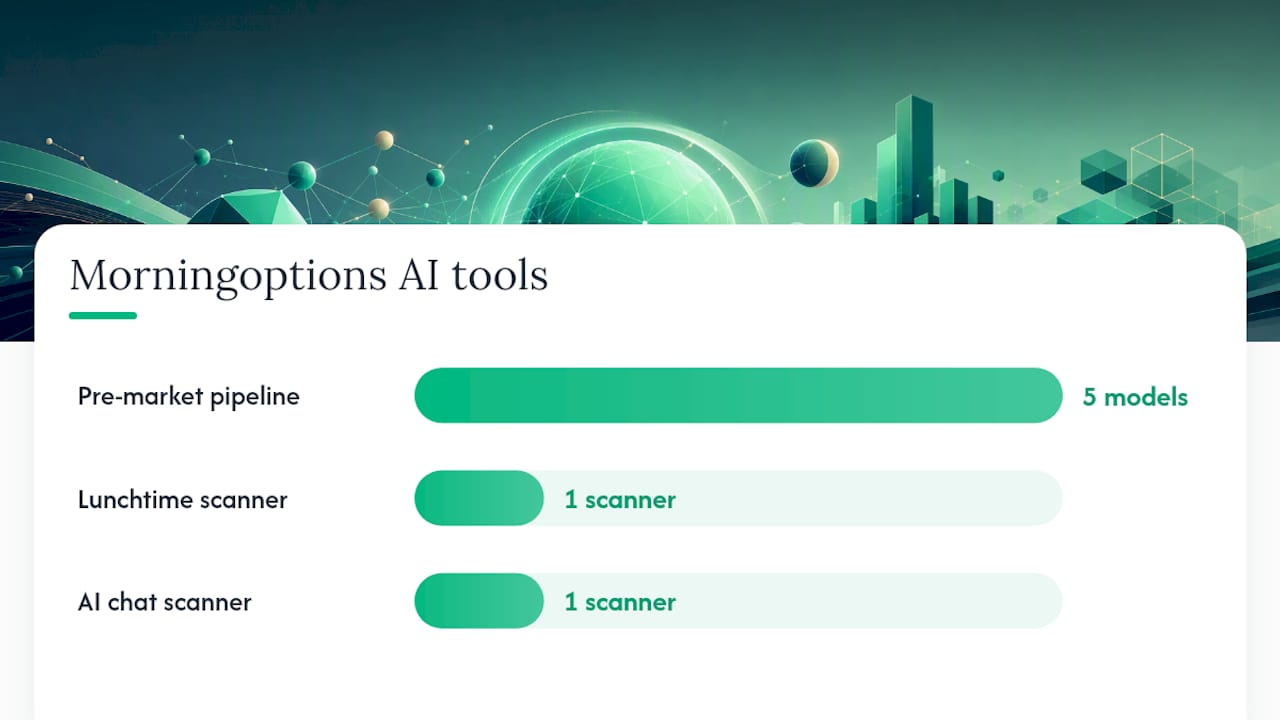
Every trading morning, Morningoptions runs ranked trade ideas through a five-AI pipeline that vets and scores each setup before the open, so you start the day with specific contract ideas and entry levels instead of a blank chart and a vague hunch. That pre-market read does most of the decision-making before the lull even starts.
- Pro-tier subscribers get a lunchtime scanner that re-checks conditions specifically during the midday window, flagging whether the day's setups still hold or have gone quiet.
- The AI chat scanner lets you research a specific ticker on demand at noon instead of guessing whether a name you're watching still fits the day's thesis.
- The practical workflow: read the morning briefing, place your higher-conviction trades in the open sweet spot, then run a quick lunchtime scan before you consider anything new between 11:30 and 2:00.
That sequence turns midday into a checkpoint rather than a scramble for action.
What I've Learned About Sitting Out Midday
The hardest skill in options trading isn't picking direction. It's tolerating quiet screen time without inventing a reason to click buy. Midday chop has burned more small accounts through unnecessary theta bleed than any single bad earnings call I've studied.
The habit worth building for the 11:30 to 2:00 ET stretch is simple: manage existing positions, review the morning's setups, run a scan if you're curious, then step away. Restraint during that window isn't a missed opportunity. It's the thing that keeps your edge intact for the windows that actually reward it.
— Customer
Turn Midday Downtime Into a Research Advantage
Sitting on your hands for two and a half hours is hard when you're staring at a live chart with nothing to do. Morningoptions gives you something better than willpower: a lunchtime scanner built specifically for that window, so you're checking real conditions instead of fighting the urge to force a trade.

The free daily briefing gets you ranked, specific contract ideas with entry levels before the open, already vetted through the five-AI pipeline instead of raw commentary you have to interpret yourself. Upgrade to the Pro tier for $89 a month and you unlock the lunchtime scanner plus the AI chat scanner, so when a ticker catches your eye at 12:15, you can check it against real-time conditions instead of relying on gut feel. If your midday trades keep going sideways, start with the free briefing and see what a pre-vetted morning read does to your win rate before you ever touch a lunchtime chart. Check out Morning Options to get today's briefing before the next open.
Sources
- The Best Time of Day to Trade Options (Data-Backed 2026)
- Wells Fargo says one big option trade fueled S&P 500 midday jump - Bloomberg
- Options trading strategies - Investopedia