
The most practical ways to generate repeatable income from options are covered calls, cash-secured puts (the Wheel), and defined-risk credit spreads, chosen by your capital, time, and the current volatility regime. Smaller accounts lean on the Wheel; mid-size accounts add index spreads; larger, hands-on traders can layer in defined-risk condors. Same-day expiration trades belong only to experienced traders who accept sharp single-day risk.
TL;DR:
- Selling premium in neutral to mildly bullish markets is most effective when implied volatility is high, especially if IV Rank is above 50.
- Small accounts should primarily use the Wheel strategy, accumulating stock at discounts and then selling covered calls, aiming for 1% to 3% monthly income.
- Capital-efficient strategies like credit spreads are suitable for larger accounts, allowing multiple trades across different tickers without full stock positions.
- Managing trades before 21 days to expiration and closing at 50% of maximum profit reduces gamma risk and improves consistency.
- Avoid high-risk tactics like naked short calls, and always size positions to 1% to 2% of your account value, with thorough planning for assignment scenarios.
Table of Contents
- What Are the Best Options Income Strategies?
- How to Choose the Right Strategy for Current Conditions
- Strike Selection, Timing, and When to Roll a Trade
- Risk Management, Assignment, and Tax Basics You Need to Know
- Sample Income Plans by Account Size
- How a Daily Scanner Applies This Framework in Practice
- What Steady Options Income Actually Feels Like
- Morningoptions: Trade-Ready Ideas Before the Bell
- Authoritative Resources
- Sources
- FAQ
What Are the Best Options Income Strategies?
Four strategies do almost all the heavy lifting for retail traders who want cash flow from their portfolios instead of just price appreciation. Each one sells time and volatility to someone else, and each has a distinct capital requirement, a distinct risk shape, and a distinct amount of babysitting it demands.
Covered calls are the entry point most people know. You own 100 shares of a stock, sell an out-of-the-money call against it, and pocket the premium. The Options Industry Council notes that weekly covered calls can generate a small percentage per week depending on the underlying stock and its implied volatility. The catch: your downside protection is limited to whatever premium you collected, so a stock that drops 15% still hurts even though you got paid for the call. You need enough capital to own a full lot of shares, which on a $50 stock means $5,000 tied up before you sell a single contract.
Cash-secured puts and the Wheel flip the covered call around. You sell a put on a stock you'd actually be happy to own, and you set aside the cash to buy those shares if assigned. If the put expires worthless, you keep the premium and sell another one. If you get assigned, you now own the stock, so you start selling covered calls against it, which is the "wheel" turning back to strategy one. The trade-off is capital lockup: a put option at a given strike price on 100 shares ties up the equivalent cash amount whether or not you get assigned, and that cash earns nothing extra while it waits.
Credit spreads solve the capital problem. Instead of securing a full stock position, you sell one option and buy another further out to cap your risk. A bull put spread might risk a few hundred dollars to make a smaller premium, and your broker holds margin equal to the risk rather than the full value of 100 shares. This capital efficiency is why most options-education resources point traders toward defined-risk spreads once they've outgrown pure covered-call income. You can run several spreads across different tickers with the same capital that one covered call position would tie up.
Iron condors, iron butterflies, and same-day expiration (0DTE) trades sit at the aggressive end. An iron condor combines a bull put spread and a bear call spread on the same underlying, collecting premium from both sides as long as the stock stays inside a range. These work well in sideways markets, but they are brutally sensitive to sudden IV spikes and fast directional moves, especially in the final hours before expiration when gamma accelerates. FINRA warns that 0DTE trades can produce high raw returns but carry serious single-day risk, and they are not built for traders who prioritize account longevity over quick hits.
A few structural warnings apply across all of these:
- Naked short calls or puts (selling options with no offsetting position) carry theoretically unlimited or near-unlimited loss potential and should stay off the table for income-focused accounts.
- Assignment can happen any time you're short an in-the-money American-style option, not just at expiration.
- High implied volatility inflates premium, but it usually means the market is pricing in a real reason for that stock to move.
- The Wheel strategy is a disciplined way to acquire stock at a discount, not a guaranteed passive-income machine, and it works best spread across several underlyings rather than concentrated in one name.
How to Choose the Right Strategy for Current Conditions
Picking a strategy isn't guesswork if you break it into three variables: direction, magnitude, and implied volatility. Ask yourself where you think the stock or index is headed, how far you think it will move, and whether current IV is rich or cheap relative to its own history.
If you're neutral to mildly bullish and IV is elevated, selling premium (covered calls, cash-secured puts, credit spreads) makes sense because you're getting paid more for the same risk. If you expect a big move and IV is low, buying options outright, or using debit spreads, is usually the better structural fit since premium-selling doesn't pay you enough to justify the risk. If you have no directional view and expect the stock to stay in a range, iron condors or butterflies fit, but only when IV is high enough to make the collected premium worth the pin risk near expiration.
IV Rank (IVR) or IV Percentile (IVP) tells you where current implied volatility sits relative to its own past year. An IVR above 50 generally favors premium-selling strategies; below 30, premium is thin and debit strategies or simply staying in cash often make more sense. Elevated VIX readings tend to favor selling premium broadly, while a quiet VIX environment tilts the math toward defined-risk debit trades or waiting.
Capital and time matter as much as market view. A $10,000 account running the Wheel on a single mid-priced stock is a completely different time commitment than a $150,000 account running eight simultaneous index credit spreads.
- Check IVR/IVP on your watchlist tickers every Monday morning before deciding whether to sell or buy premium that week.
- Confirm your directional bias with a quick look at the 20-day and 50-day moving averages.
- Match the setup to your capital band: covered calls and CSPs for smaller accounts, credit spreads for capital efficiency, condors only once you're comfortable managing multiple legs.
- Size the position at 1% to 2% of account value at risk, not 1% to 2% of the premium collected.
- Log the trade and set your profit-target order immediately after entry, not a day later.
Pro Tip: Keep a simple spreadsheet with IVR, direction, and the strategy you chose for every trade. After eight to ten weeks you'll see your own pattern of when premium-selling actually worked for you versus when you forced a trade into the wrong IV regime.
Traders who want a structured starting point for this decision process often lean on a simple options strategy selection guide rather than reinventing the framework from scratch each week.
Strike Selection, Timing, and When to Roll a Trade
Delta is the fastest proxy for probability of assignment, and most income traders anchor their short strikes to it rather than picking a round-number price target. Go tighter than 15 delta and premium gets thin; go wider than 30 and you're taking on assignment risk that often isn't worth the extra credit.
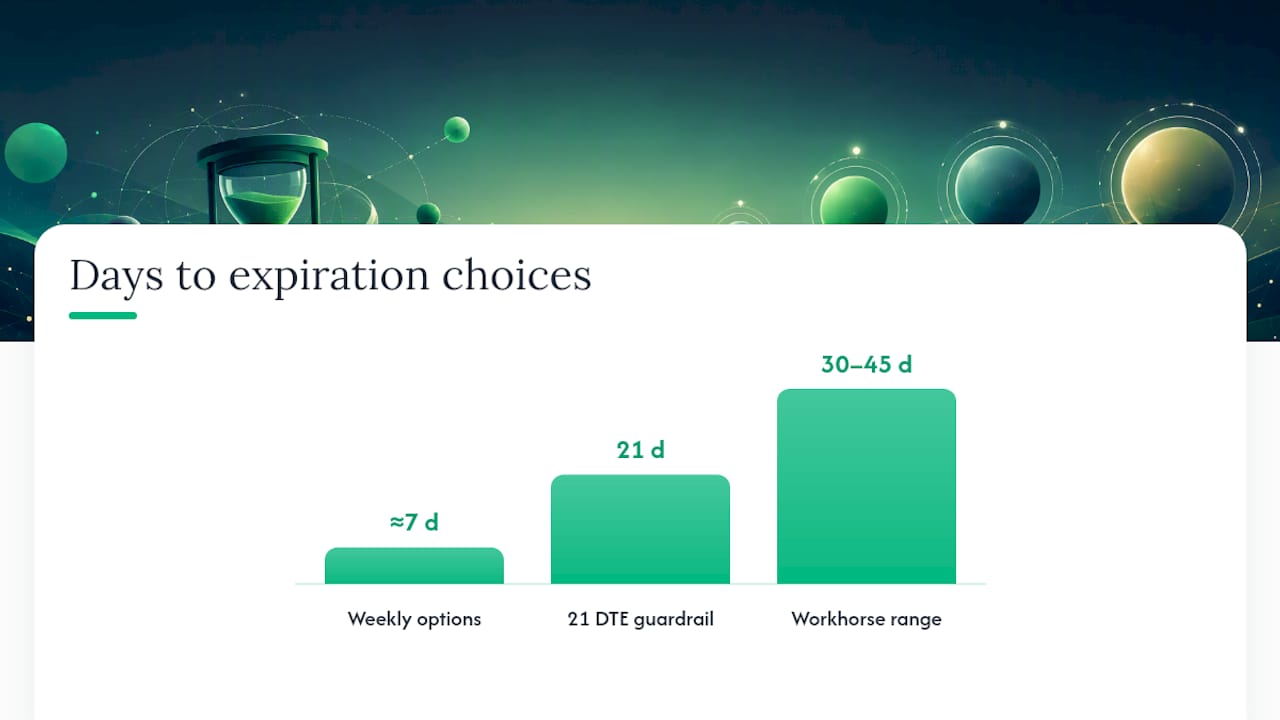
Days to expiration (DTE) shapes both your income pace and your management burden. Weekly options generate income faster and let you react to changing conditions almost immediately, but they also demand more attention and carry more gamma risk close to expiration. The 30 to 45 DTE window is the traditional workhorse range for credit spreads and iron condors: enough time decay to make the trade worthwhile, but not so much gamma risk that a single bad day wrecks the position. A 30 to 45 DTE iron condor built around a 16 delta short strike with a defined exit plan is a common structure for traders who want income without living at their desk all day.
Exit discipline is where most income traders either build consistency or blow it up:
- Close winning credit spreads at roughly 50% of max profit rather than holding for the last dollar. This is a widely used rule because the risk of holding to expiration for the remaining premium rarely justifies the extra tail exposure.
- Treat 21 DTE as a guardrail on any short premium trade that hasn't hit your profit target. That's typically when gamma risk starts accelerating, and it's a natural point to close, roll, or adjust.
- Roll a threatened short strike out in time (and sometimes up or down in strike) when it's tested, rather than letting it go into the money and hoping.
- Plan your assignment scenario before you ever enter a cash-secured put. Know exactly what you'll do with the shares if assigned.
Pro Tip: Set a GTC limit order to buy back your credit spread at 50% of max profit the moment you open the trade. You won't have to babysit the position, and you remove the temptation to hold too long out of greed.
Cap risk per trade at roughly 1% to 2% of account value, and limit yourself to a manageable handful of simultaneously open income positions, generally in the 3 to 5 range for most retail-size accounts. More than that and you're managing a job, not a portfolio.
Risk Management, Assignment, and Tax Basics You Need to Know
American-style equity options can be exercised any time before expiration, which means a short call or put can get assigned early, especially around dividend dates or when an option goes deep in the money. Build your cash-secured put and covered call positions assuming assignment is a real possibility, not an edge case.
0DTE trades deserve their own line of caution. A position that looked fine at 10 a.m. can move violently by 3 p.m. as gamma accelerates into the close, and FINRA specifically flags this single-day risk as a reason most retail investors focused on longevity should avoid heavy 0DTE exposure. If you do trade them, size the position to your maximum possible loss, not to the credit received.
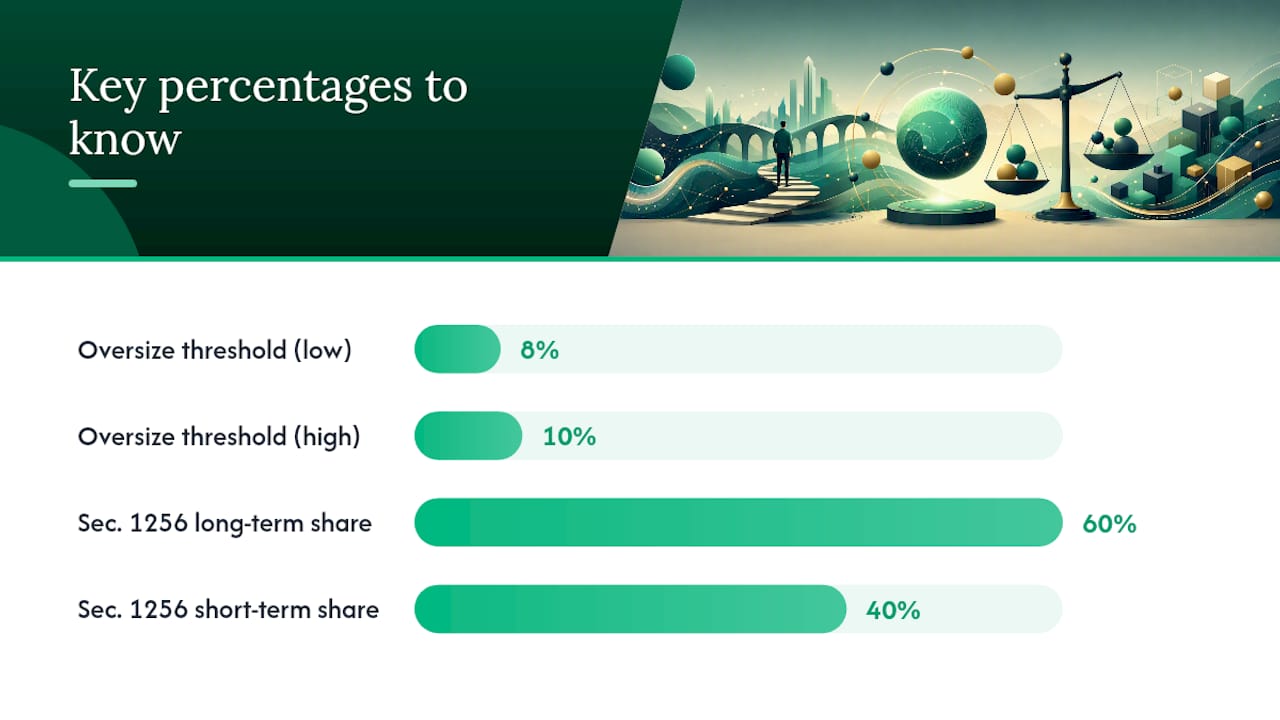
Stress test before you trade: ask what happens to your account if your three largest open positions all hit max loss in the same week. If that number exceeds 8% to 10% of account value, you're oversized.
Quick risk and tax notes:
- Verify your broker's registration and protections through FINRA's BrokerCheck before committing significant capital anywhere.
- Certain broad-based index options qualify for Section 1256 tax treatment, which splits gains 60/40 between long-term and short-term rates regardless of holding period, unlike single-stock options.
- Wash-sale rules can apply to options the same way they apply to stock, complicating loss harvesting.
- Options income tax treatment is genuinely complicated. Talk to a tax professional who understands advanced strategies for active traders before assuming any strategy is more tax-efficient than another.
Sample Income Plans by Account Size
Small accounts ($5,000 to $25,000): Run the Wheel on one or two liquid, moderately priced stocks you'd actually want to own. Start with cash-secured puts around 20 to 30 delta, accept assignment when it happens, then sell covered calls against the shares. Realistic expectations sit in the range of 1% to 3% monthly, with real variance week to week.
Mid-size accounts ($25,000 to $100,000): Diversify the Wheel across three to five names and add index credit spreads on SPY or similar ETFs for the capital efficiency and event-risk diversification a single-stock approach can't offer. A blended allocation across five to eight simultaneous positions smooths the return curve considerably.
Large or active accounts ($100,000-plus): Blend defined-risk spreads across multiple underlyings with a modest, clearly capped allocation to 0DTE or short-dated trades if you have the time and temperament for it. Professionals often run two or three complementary strategies rather than maxing out one to limit correlated drawdowns.
Track performance on a rolling 4 to 12 week basis rather than judging any single week. Income strategies have losing stretches, and a trader who bails after one bad week never gets to see the strategy's actual edge play out.
How a Daily Scanner Applies This Framework in Practice
Running the IV, delta, and DTE checks above manually across dozens of tickers every morning is what burns people out. Morningoptions runs a daily AI pipeline that screens for IV rank, delta, and liquidity, then ranks trade ideas against a version of the decision matrix covered here before the market opens. Each morning briefing hands you specific contract ideas with entry levels rather than vague commentary, and a lunchtime scanner catches midday shifts in IV or price action. This is paid subscription software, not financial advice, and every trade idea still requires your own judgment about fit and risk.
What Steady Options Income Actually Feels Like
Consistency comes from a fixed review schedule, not constant screen-watching. A Monday, Wednesday, Friday check-in beats daily obsession, and it forces you to judge results over weeks, not days. Expect losing stretches. Judge yourself on the rolling average, and the emotional part of this gets easier fast.
— Customer
Morningoptions: Trade-Ready Ideas Before the Bell
Morningoptions turns everything covered in this guide, the delta ranges, the IV checks, the DTE windows, into a five-minute morning read instead of an hour of manual screening.

Every trading day, a free briefing delivers ranked contract ideas with entry levels filtered for liquidity and IV conditions, so you're not building the decision matrix from scratch at 6 a.m. A paid Pro tier adds a lunchtime scanner for midday shifts and an AI chat tool for researching any ticker on demand. It fits best for active traders who already understand the strategies above but don't have hours to spend scanning chains before the open. Start with the free daily briefing and see how the ranked ideas line up with the strike and DTE rules you just read.
Authoritative Resources
For deeper strategy mechanics and regulatory guidance, see FINRA's 0DTE options overview, the Options Industry Council's covered call primer, and Charles Schwab's options strategy library.
This article is general information, not a substitute for advice from a qualified financial advisor. Consult a qualified financial professional about your own circumstances before acting on anything here.
Sources
- Options Industry Council — Covered call / buy-write
- Investopedia — Options trading strategies overview
- Fidelity — Learning center (options context)
FAQ
What Is the Best Options Income Strategy?
There's no single best strategy. Covered calls and cash-secured puts fit smaller accounts best, while credit spreads offer better capital efficiency for traders managing more positions at once.
What Is the Most Profitable Options Strategy?
Naked selling and 0DTE trades can post the highest raw returns in a given week, but FINRA warns they carry outsized single-day risk that makes them unsuitable for most retail traders focused on long-term account growth.
What Is Warren Buffett's Favorite Options Strategy?
Buffett has publicly discussed selling cash-secured puts as a disciplined way to acquire stock at a price he already wants to own it at, collecting premium along the way rather than chasing quick gains.
Do I Need 100 Shares to Sell Covered Calls?
Yes. Each standard equity option contract controls 100 shares, so covered calls require owning at least 100 shares of the underlying stock per contract sold.