
ChatGPT can speed up and structure stock research, but it cannot reliably predict prices or replace primary sources. It's a research assistant, not a forecasting engine or an execution platform. Used well, it earns its keep on three tasks: summarizing dense documents, generating structured screening criteria from a plain-English thesis, and stress-testing your own investment logic by arguing the other side.
The catch is verification. Every number ChatGPT produces needs to trace back to a primary source before you act on it.
- Summarize 10-Ks, 10-Qs, and earnings call transcripts in minutes instead of hours
- Turn a vague thesis ("undervalued semiconductor with margin expansion") into concrete screening filters
- Generate a bear case you hadn't considered, forcing you to defend your position
Pro Tip: Ask ChatGPT to cite the exact filing section for any figure it gives you. If it can't, treat the number as unverified.
TL;DR:
- ChatGPT can quickly summarize financial filings and generate screening criteria but cannot access real-time data or verify figures without primary source checks.
- Its predictive accuracy for news-based price directions is close to chance at around 51%, and it performs better with detailed context than with headlines.
- Every numerical estimate provided by ChatGPT must be traced back to exact SEC filings, including section and line item references, to ensure accuracy.
- Use specific prompts specifying roles and outputs to generate checkable, structured research results, and pair this with live data tools for trade execution decisions.
- Verification against SEC EDGAR filings is essential; do not rely solely on ChatGPT for figures, as hallucinations and outdated data are common risks.
Table of Contents
- What ChatGPT Can and Cannot Do for Stock Research
- Prompt Templates and Workflows for Core Research Tasks
- How Do You Verify ChatGPT's Financial Data?
- Practical Use Cases for AI Stock Analysis
- How MorningOptions Complements ChatGPT Research
- Why Prompt-First, Verification-Second Actually Works
- Key Takeaways
- Sources
What ChatGPT Can and Cannot Do for Stock Research
The evidence on ChatGPT's actual predictive power is more interesting than most people assume, and more limited than the hype suggests. A Finance Research Letters study found that GPT-4's "attractiveness" ratings on stocks correlated with future earnings surprises and returns, and a trading strategy built around those ratings produced positive returns under the study's conditions. That's a real signal, not a party trick. But a separate test found something more sobering: when researchers fed the model single news headlines and asked it to predict direction, accuracy landed around 51%, barely above a coin flip.
Both results can be true at once. ChatGPT does better with rich context (full filings, structured prompts, multiple data points) than with a single ambiguous headline.
The hard limits don't go away, though:
- No live pricing or real-time market data, ever, regardless of what a response implies
- A training cutoff means recent earnings, guidance changes, or news may be missing entirely
- Hallucinated figures happen, and they read exactly as confident as accurate ones
- It cannot place trades, check account risk, or execute anything
Pasting proprietary trade data or account details into a public chat window also creates a privacy exposure most traders don't think about until it's too late.
Prompt Templates and Workflows for Core Research Tasks
The best results come from a Role, Task, Output pattern: tell ChatGPT who to act as, exactly what to do, and exactly what format you want back. Vague prompts get vague answers. Specific prompts get structured, checkable outputs.
Here's a five-prompt workflow that covers most research needs:
- 10-K/10-Q summarizer. "Act as an equity research analyst. Summarize the attached 10-K's Business Overview, MD&A, and risk factors in under 300 words. Flag any changes in revenue recognition or segment reporting versus the prior year."
- Earnings call tone and delta. "Compare this quarter's transcript to last quarter's guidance language. List every instance where management raised, lowered, or reiterated guidance, with the exact quote."
- Valuation comparables. "Build a table comparing [Ticker]'s P/E, EV/EBITDA, and gross margin to [three peer tickers]. Note the data source and reporting period for each figure."
- Screening filter generator. "Convert this thesis into five quantitative screening criteria I could run in a stock screener: [paste your thesis in plain English]."
- Thesis critic. "Argue the strongest bear case against this position, using only the facts in the attached filing. List the top three risks I'm underweighting."
When you paste source material, include the sections that actually carry the numbers: the Business Overview, the MD&A, and any footnotes on debt, revenue recognition, or segment breakdowns. Skip boilerplate legal language; it wastes context space and adds nothing.
Always specify the output format. Ask for tables when you want numbers, bullet lists for pros and cons, and a separate traceability list mapping every figure to its filing and line item. That last request matters more than it sounds. Corporate Finance Institute's guidance on prompt structuring for financial analysis recommends this exact approach, and it's the single easiest way to catch a hallucinated figure before it costs you money.

Pro Tip: Run the thesis critic prompt last, after you've built your bull case. It's the closest thing to a free second opinion you'll get from a machine.
How Do You Verify ChatGPT's Financial Data?
Verification isn't optional. It's the second half of the workflow, and skipping it is where most AI-assisted research goes wrong.
Start with SEC EDGAR, the authoritative source for every U.S. public company's 10-Ks, 10-Qs, and proxy statements. When ChatGPT gives you a revenue figure, a margin, or a capex number, pull the actual filing and check it against the income statement, cash flow statement, or segment footnote directly.
Build the traceback into your prompt instead of doing it after the fact:
- "For every number in your summary, list the exact filing, section heading, and line item it came from."
- "If you're not certain a figure is current, say so explicitly instead of stating it as fact."
- "Flag any number you're inferring rather than quoting directly from the source."
A useful rule of thumb: primary filings feed your model inputs, real-time data feeds feed your execution decisions. Never let the two swap places. OpenAI's own documentation on deep research limitations notes that the model lacks reliable real-time signals, which is exactly why intraday decisions need a dedicated data feed, not a chat window.
Practical Use Cases for AI Stock Analysis
Four workflows cover most of what active investors and traders actually need day to day.
- Screening. Convert your thesis into filters, then ask ChatGPT to format the output as exportable rows you can drop straight into a spreadsheet or screener tool.
- Earnings review. Paste the key excerpts from a call, not the whole transcript, and ask for guidance deltas plus a summary of the toughest analyst questions.
- Valuation sanity checks. Request multiples against peer medians, then run the verification checklist before trusting any single number.
- Options pre-market prep. Have ChatGPT summarize the day's catalysts and hypothesize which strategies might fit, then validate specific strike and expiration choices against a live options scanner.
That last step matters — tools like Options Trade Analysis: A Practical Workflow for Traders outline how to validate and refine options trade ideas efficiently. ChatGPT can tell you a stock has an earnings catalyst next week and suggest a strategy shape. It cannot tell you the current bid-ask spread, open interest, or implied volatility skew on a specific contract, because it has no access to live chain data. That's a job for a purpose-built scanner, not a chat model.
- Keep screening prompts narrow: five criteria beats fifteen vague ones
- Always separate "what the model says" from "what the filing confirms"
- Treat any AI-generated backtest code as a draft that needs sandbox testing before you trust its output
How MorningOptions Complements ChatGPT Research
ChatGPT is strong at synthesis: structuring your thesis, summarizing filings, and stress-testing an idea. It's weak at anything that requires live market conditions, which is exactly the gap Morningoptions fills for options traders.
A practical workflow looks like this: use ChatGPT to summarize a company's catalysts and draft a strategy hypothesis, then bring that ticker to Morningoptions' pre-market scanner to validate specific entry levels, contract selection, and bear-case analysis against current chain data. Morningoptions runs a five-AI pipeline that vets and scores trade ideas every market morning, delivering ranked, specific contracts instead of vague commentary.
- Free daily briefings cover ranked trade ideas before the open
- The Pro tier ($89/month) unlocks the lunchtime scanner and an AI chat scanner for researching tickers on demand
- Every idea includes entry levels and bear-case analysis, not just a ticker and a hunch
Pro Tip: Use ChatGPT for the "why" behind a trade idea and Morningoptions for the "which contract, at what level."
Why Prompt-First, Verification-Second Actually Works
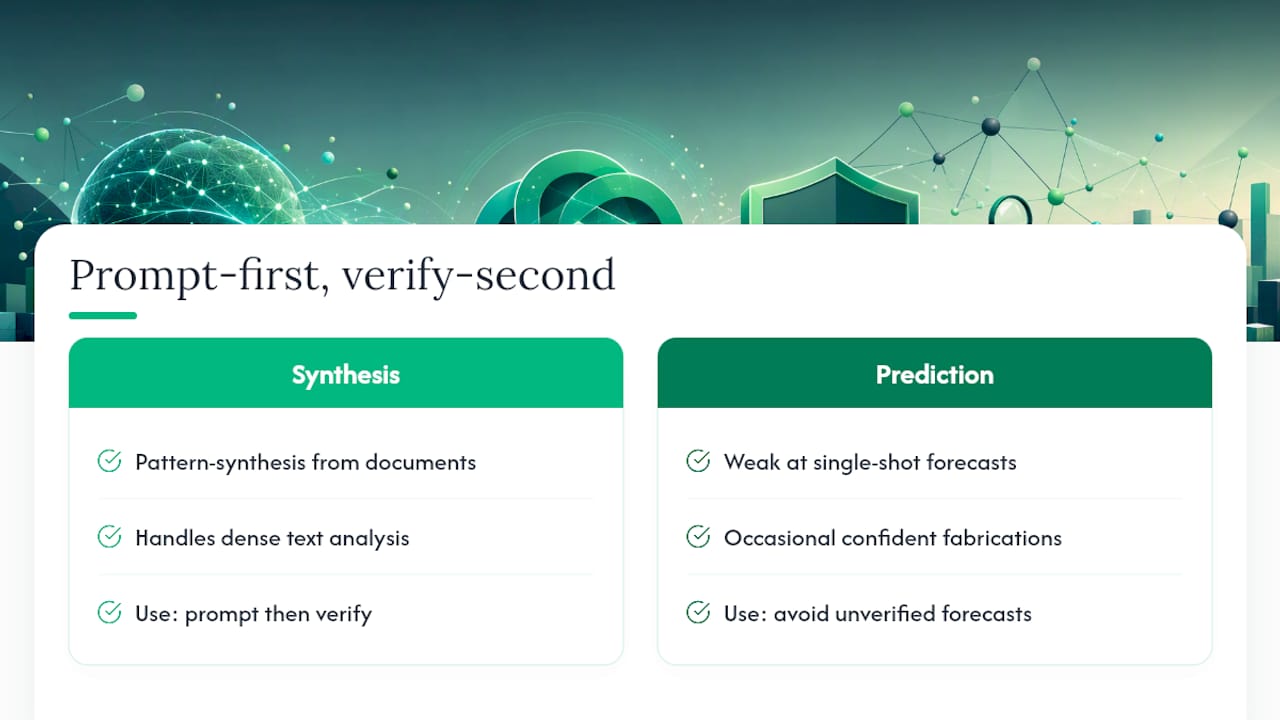
Most advice on using AI for investing either oversells the model's predictive power or dismisses it entirely as a toy. Both miss the point. The Pelster research shows GPT-4's ratings tracked real earnings surprises, which means the model is genuinely useful for synthesis and pattern-spotting across dense text. The headline-prediction test shows it's nearly useless for single-shot forecasting. The gap between those two findings is the whole story.
Conventional advice treats ChatGPT like either an oracle or a gimmick. The better frame: it's a fast, tireless intern who reads everything but occasionally makes things up with total confidence. Your job is to give it Role, Task, Output prompts on primary documents, then verify every number against EDGAR before it enters your thesis. Skip the verification step, and you've just automated your risk of trading on fiction. Get that habit right first. Everything else, prompt phrasing, output formatting, template tweaking, is secondary.
— Customer
Key Takeaways
ChatGPT accelerates document summarization and thesis testing for stock research, but every material figure it produces requires primary-source verification before use.
| Point | Details |
|---|---|
| Use it for synthesis | Summarize 10-Ks, earnings calls, and build screening filters from plain-English theses. |
| Verify every number | Trace figures back to the exact SEC EDGAR filing, section, and line item. |
| Respect the accuracy ceiling | Single-headline predictions hit roughly 51% accuracy, barely above chance. |
| Separate research from execution | Use ChatGPT for hypotheses; use live scanners for strike, expiration, and pricing decisions. |
| Pair AI research with a scanner | Validate ChatGPT-generated trade ideas against Morningoptions' pre-market contract data. |
This article is general information, not a substitute for advice from a qualified financial advisor. Consult a qualified financial professional about your own circumstances before acting on anything here.
Sources
- Can ChatGPT assist in picking stocks? — Finance Research Letters
- FoFI 2024 paper — ChatGPT headline predictive accuracy (Alejandro Lopez-Lira)
- Best AI prompts for stock analysis — Corporate Finance Institute
- SEC EDGAR — filings browse
- OpenAI help article — deep research in ChatGPT