
An ex-dividend date normally knocks the stock price down by roughly the dividend amount, and options price that drop in before it happens, pushing call premiums lower and put premiums higher. The real danger isn't the price move itself. It's early assignment on short American-style calls when the dividend outweighs whatever extrinsic value is left in the option. Before that last trading session, check the dividend against your extrinsic cushion and decide: close, roll, exercise, or accept the assignment.
TL;DR:
- The stock price typically drops by the dividend amount on the ex-date, and options prices adjust beforehand, reflecting this expected decline.
- Early assignment of American-style calls becomes likely when the expected dividend exceeds the remaining extrinsic value of the option, especially if the cushion is small.
- Naked short call sellers face immediate stock purchase risk if assigned, potentially at unfavorable prices, and may owe dividends if they hold short positions over the ex-date.
- Covered call traders often mitigate early assignment risk by rolling the strike before the ex-date if the extrinsic cushion is small, avoiding unwanted share delivery.
- Running a pre-ex-dividend checklist that compares extrinsic value to the dividend and using a premarket scanner speeds decision-making and reduces costly surprises.
Table of Contents
- How Ex-Dividend Dates Affect Stock and Option Pricing
- Early Assignment Risk: The Economics and Operational Consequences
- How the Risk Differs by Strategy
- The Pre-Ex-Date Checklist Every Trader Should Run
- How a Premarket Scanner Speeds Up This Decision
- A Trading Plan Rule Worth Writing Down
- Primary Sources for Verification
- Sources
- FAQ
How Ex-Dividend Dates Affect Stock and Option Pricing
The market doesn't wait for the ex-date to react. Once a company declares a dividend, traders already know the stock will open lower on the ex-date by roughly that dividend amount, so option prices adjust in the days beforehand rather than all at once on the morning of the drop.
Listed equity options generally aren't contractually adjusted for ordinary cash dividends. Instead, the anticipated payout gets baked into the stock's forward value, which is what options actually price. That's why calls become relatively less valuable and puts relatively more valuable as the ex-date approaches. Implied volatility itself usually doesn't spike from a routine dividend, but the Greeks shift underneath the surface: delta on calls edges down, delta on puts edges toward more negative, and the pricing models are quietly discounting the expected payout from the stock's forward price.
This is also where the standard Black-Scholes framework runs into trouble. It wasn't built for American-style options with discrete dividend payments, so professional desks adjust by subtracting the present value of expected dividends from the stock price before running the model. Retail platforms usually handle this automatically, but it explains why a call can lose value even on a flat trading day.
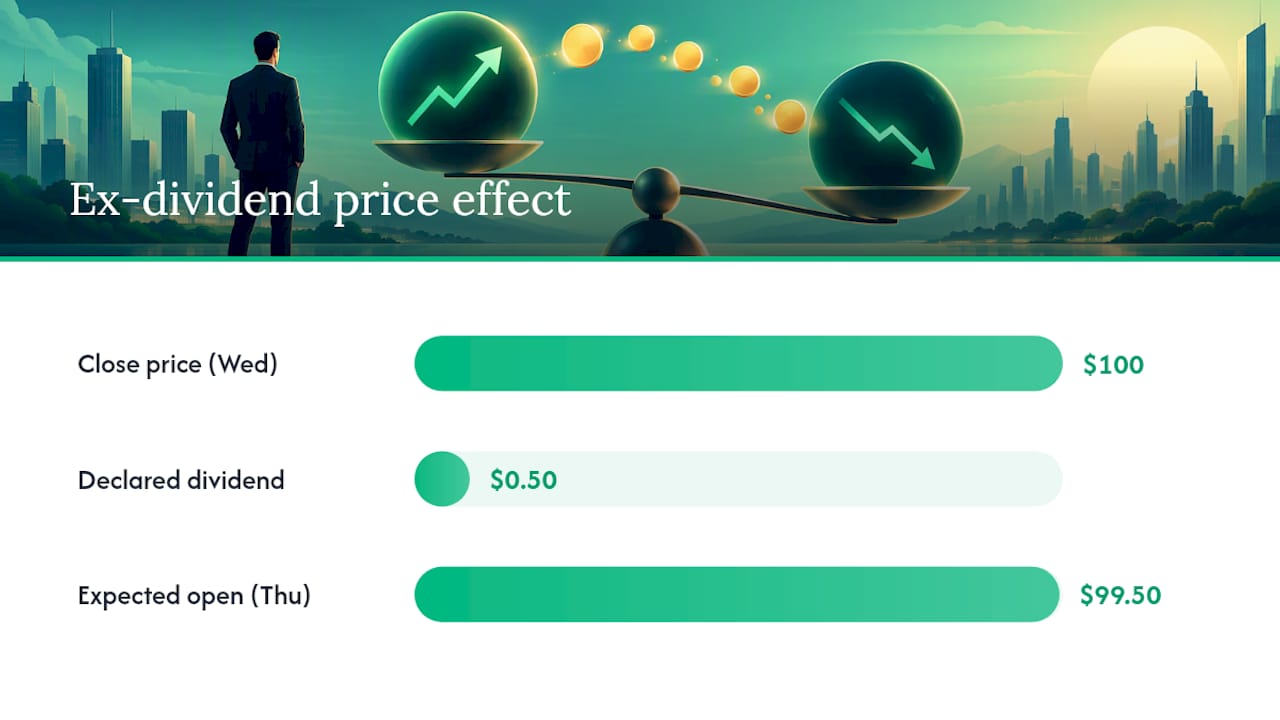
A quick example: say a stock trades at $100 and declares a $0.50 dividend with an ex-date of Thursday. By Wednesday's close, option pricing already reflects the expected $0.50 drop:
- A near-the-money call loses a few cents of value it wouldn't lose on a normal day, purely from the dividend adjustment.
- A near-the-money put gains a comparable few cents, even with no other market movement.
- Deep in-the-money or far out-of-the-money contracts feel the effect less, since intrinsic value dominates the price at those strikes.
The stock opens Thursday around $99.50, and nothing about that move is a surprise to anyone who was watching the options chain the day before.
Early Assignment Risk: The Economics and Operational Consequences
Early assignment happens when the holder of an American-style call exercises before expiration, and it's tied directly to dividends more than any other single factor. American-style contracts allow exercise on any market day up to expiration, unlike European-style options, which generally can't be exercised before specific permitted dates and therefore don't carry this same dividend-driven assignment mechanic. Most single-stock equity options in the U.S. trade American-style, so this risk applies broadly.
The rule of thumb is straightforward: if the dividend per share exceeds the remaining extrinsic value of the call, early exercise becomes economically rational for the holder. Capturing the dividend is worth more to them than the time value they'd give up by exercising early rather than selling the option.
Extrinsic cushion, in plain terms: extrinsic value equals the market premium minus intrinsic value. If that cushion is smaller than the dividend, assignment risk shifts from theoretical to likely.
For the seller on the other side, assignment isn't abstract. It means:
- Delivering 100 shares per contract at the strike price, regardless of where the stock is trading.
- If the seller doesn't already own the shares, potentially buying them at market price to cover the delivery and possibly owing the dividend if left short over the ex-date.
- Assignment notices typically arriving the morning after exercise, often before the trader has had a chance to react to overnight news.
Brokers and exchanges don't leave this undocumented. FINRA has published specific guidance on how members must inform customers about assignment mechanics, and the OCC maintains its own rules for how contract terms get adjusted around corporate actions. Neither body promises to shield a trader from a dividend-driven exercise. That responsibility sits with whoever sold the call.
How the Risk Differs by Strategy
Assignment mechanics don't hit every position the same way. The strategy you're running determines whether an ex-dividend date is a minor annoyance or a genuine problem.
-
Covered calls. If you're assigned, you keep the option premium but lose the shares (and the dividend) at the strike price. The tradeoff is simple math: is the premium you'd give up by buying back the call worth more than the dividend plus any upside you're forfeiting? Many covered-call traders roll the short strike out and up a few days before the ex-date rather than let a shallow extrinsic cushion invite exercise. A closer look at covered call strategy types shows how rolling decisions vary by how far out-of-the-money the strike sits.
-
Naked short calls. Here the exposure is worse. Without shares to deliver, assignment forces a same-day stock purchase, potentially at a bad price if the market gaps, and the trader may still owe the dividend if the resulting short position isn't closed before the record date. This is the scenario where the mechanics of assignment matter most, because there's no underlying stock cushioning the blow.
-
Spreads and iron condors. The long leg doesn't automatically protect you from a short-leg assignment. If your short call gets exercised early, you're suddenly short 100 shares while your long call sits untouched until you decide what to do with it. That timing gap is where iron condor positions can quietly turn into directional stock risk overnight.
-
Puts. Put premiums tend to rise into the ex-date as the market prices in the anticipated price drop, and put-call parity reflects that dividend expectation directly in the relative pricing of calls and puts at the same strike.
The Pre-Ex-Date Checklist Every Trader Should Run
This is the workflow that matters more than any theory. Run it on every short call position you're holding once a dividend gets declared.
- Confirm the ex-date and the exact dividend amount from the issuer's announcement or your broker's corporate-action alert. Don't rely on memory. Companies occasionally adjust declared amounts.
- Calculate extrinsic value for each short call: premium minus intrinsic value. The intrinsic-versus-extrinsic breakdown is worth bookmarking if you're doing this by hand rather than pulling it from your platform's chain data.
- Compare that extrinsic cushion to the dividend per share. If the dividend is larger, close or roll the position before the last trading session preceding the ex-date. If the cushion comfortably exceeds the dividend, you can typically hold and monitor.
- Check margin and settlement implications before acting. Rolling or buying back a call changes your buying power requirement, and exercising shares yourself ties up capital you may not want tied up.
Pro Tip: Keep a small capital buffer sitting in your account during dividend season specifically. An unexpected assignment can trigger a same-day buy-in, and scrambling for margin at 9:35 AM is a worse problem than the dividend itself.
How a Premarket Scanner Speeds Up This Decision
Running the extrinsic-versus-dividend check manually across a dozen positions before the open isn't realistic on a weekday morning. This is exactly the kind of repetitive, time-sensitive filtering a daily scanner should handle for you.
A useful premarket workflow flags:
- Upcoming ex-dividend dates on tickers where traders currently hold or are considering short calls.
- The declared dividend amount, ideally pulled directly from the corporate-action feed rather than estimated.
- Open interest on the relevant strikes, since heavier open interest on deep-in-the-money calls tends to correlate with higher assignment activity.
- An estimated extrinsic-value cushion, so the dividend-versus-premium comparison is already done by the time the briefing is read.
Some daily briefings build around this kind of pre-market filtering, ranking setups and flagging catalysts like earnings and news events before the opening bell rather than leaving traders to piece it together from a dozen separate alerts. For a position with a thin extrinsic cushion heading into an ex-date, that's the difference between reacting Tuesday night and discovering the problem Wednesday morning after assignment already happened.
A Trading Plan Rule Worth Writing Down

Small accounts should generally avoid holding short calls across an ex-date when the extrinsic cushion is thin. A single assignment can eat a disproportionate chunk of available capital, and the dividend captured by the option holder isn't worth the disruption to your buying power. Larger accounts with enough capital to comfortably absorb an assignment have more room to hold through it, provided the math still favors staying in the trade.
Either way, the same three-step line belongs in every premarket routine: flag the ex-date, compute the extrinsic cushion, decide before the close, as illustrated by Bitcoin Firm Strive Unveils Daily Dividend Payments for SATA Preferred Shares. Skipping that step is how traders end up short stock they never meant to hold.
— Customer
Primary Sources for Verification
- FINRA: Trading options and understanding assignment
- FINRA Notice to Members 00-54
- Fidelity: Dividends and options assignment risk
- IRS Instructions for Form 1099-DIV
This article is general information, not a substitute for advice from a qualified financial advisor. Consult a qualified financial professional about your own circumstances before acting on anything here.
Sources
- Trading options: Understanding assignment — FINRA
- Notice to members 00-54 — FINRA
- Dividends and options assignment risk — Fidelity
- Instructions for Form 1099‑DIV — IRS
FAQ
Is It Good to Buy a Stock on the Ex-Dividend Date?
Buying on the ex-date means you won't receive that specific dividend payment, and the stock typically has already dropped by roughly the dividend amount at the open. There's no inherent pricing advantage to buying exactly on the ex-date versus a day before or after.
What Is the Rule About Holding Periods for Qualified Dividends?
Qualified-dividend tax treatment depends on holding-period rules tied to the ex-dividend window, and simply buying a share right before the ex-date doesn't automatically qualify the payout for favorable tax treatment. Traders running dividend-capture strategies should check the specific holding-period requirement before assuming a lower tax rate applies.
What Are the Main Types of Dividends Companies Pay?
Companies most commonly pay cash dividends, but stock dividends, property dividends, and special (one-time) dividends also appear regularly across public markets. Cash dividends are the ones that drive the ex-date pricing mechanics and options assignment risk covered throughout this guide.
Will I Get the Dividend if I Buy the Stock the Day Before the Ex-Dividend Date?
Yes. As long as you own the shares before the market opens on the ex-dividend date, you're entitled to the upcoming dividend payment. Buying on the ex-date itself, rather than the day before, means you miss that payment.