
Four trades cover almost every basic single-leg position you'll place: the long call (bullish, max loss capped at the premium you pay), the long put (bearish, same capped-loss logic), the short call (bearish to neutral, income now but theoretically unlimited risk), and the short put (neutral to bullish, income now with risk capped at the stock falling to zero). Each uses one option contract, one strike, one expiration. No spreads, no combinations.
- Long call: bet on a stock rising, lose at most what you paid for it.
- Long put: bet on a stock falling, same capped downside.
- Short call: collect premium betting a stock stays flat or drops, but the loss has no ceiling if it rips higher.
- Short put: collect premium betting a stock stays flat or rises, with risk capped by the stock's floor at zero.
Key Takeaways
Every single-leg options trade splits into one of four types, and knowing which one matches your market view and risk tolerance is the entire game.
| Point | Details |
|---|---|
| Four core strategies | Long call, long put, short call, and short put cover nearly every basic single-leg trade. |
| Buyer risk is capped | Long calls and long puts can lose at most the premium paid, nothing more. |
| Seller risk varies sharply | Short calls carry theoretically unlimited loss; short puts are capped by the stock hitting zero. |
| Contract size drives sizing | One contract equals 100 shares, so premiums multiply fast and position sizing matters. |
| Get vetted ideas daily | Morningoptions delivers ranked single-leg trade ideas with entry levels each trading morning. |
Table of Contents
- What Is a Long Call and How Does It Pay Off?
- What Is a Long Put and When Should You Buy One?
- What Is a Short Call and Why Is the Risk So High?
- What Is a Short Put and How Does Assignment Work?
- The Mechanics You Need Before Trading a Single Leg
- When Does a Single-Leg Trade Actually Make Sense?
- Sources
What Is a Long Call and How Does It Pay Off?
A long call gives you the right to buy 100 shares at a fixed strike price before expiration. You use it when you expect a stock to climb and want leveraged upside without buying shares outright.
Say XYZ trades at around fifty dollars. You buy a call with a strike slightly above that price for a modest premium, and your breakeven is about the strike plus the premium paid. If XYZ rises notably by expiration, your option value increases substantially, multiplying your initial investment. If XYZ stays below the strike, the call expires worthless and you lose the premium. That's it. Nothing more.
- Time decay (theta) erodes the premium every day, faster as expiration nears.
- Rising implied volatility helps you; a volatility crush after earnings can hurt even if you're directionally right.
- Size the position so a total loss doesn't dent your account meaningfully.
Pro Tip: Use delta as a rough proxy for your odds of finishing in the money. A 0.30 delta call has roughly a 30% chance of expiring profitable, which helps you gauge how aggressive the bet actually is. For a deeper look at directional setups, see this bullish options strategies guide.
What Is a Long Put and When Should You Buy One?
A long put gives you the right to sell 100 shares at a fixed strike, and it's the mirror image of the long call: you buy it when you expect a stock to drop, whether for speculation or portfolio protection.
Suppose ABC trades near eighty dollars. You buy a put with a strike below that price for a premium costing a few hundred dollars. Breakeven is calculated as the strike minus the premium. If ABC falls significantly below the strike before expiration, the put gains value considerably. If ABC stays above the strike, the put expires worthless and your loss is limited to the premium paid.
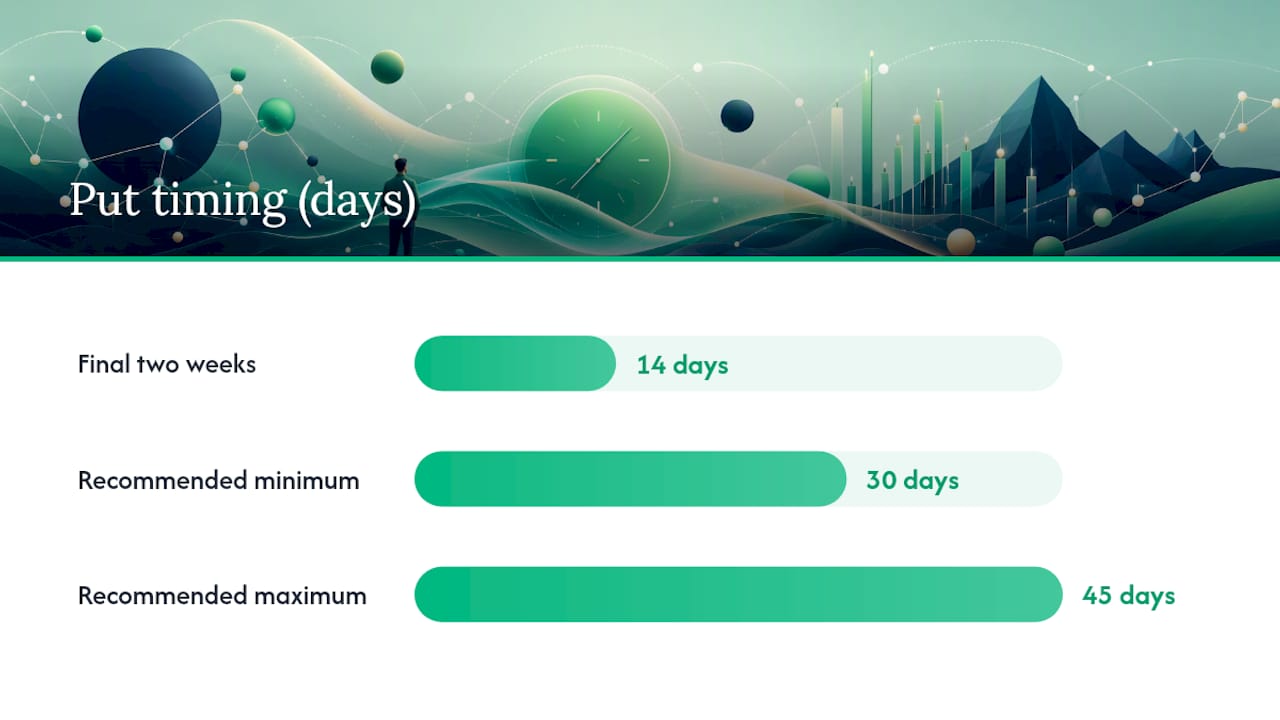
- Time decay works against you here too, especially in the final two weeks before expiration.
- A put bought as portfolio insurance against a stock you own behaves differently than one bought purely to speculate on a decline.
- Implied volatility often rises when stocks fall, which can boost a put's value beyond the pure directional move.
Pro Tip: Beginners often buy puts too close to expiration and get burned by theta. Give yourself at least 30 to 45 days so an early move in your favor has time to overcome decay.
What Is a Short Call and Why Is the Risk So High?

Selling a naked call means you collect premium upfront in exchange for the obligation to sell 100 shares at the strike price if assigned. Traders use it when they expect a stock to stay flat or fall, treating the premium as income.
Say DEF trades near forty dollars. You sell a call with a strike above that price and collect a premium upfront. If DEF stays below the strike at expiration, you retain the premium. But if DEF rises sharply beyond the strike, your losses can be very large, as you owe the difference between the stock price and the strike per share.
- Loss is theoretically unlimited since a stock has no ceiling on how high it can climb.
- Brokers require significant margin to open this position, and not every account is approved for it.
- Assignment can happen any time the option is in the money, particularly near ex-dividend dates.
Sellers of naked calls face theoretically unlimited risk because there's no cap on how high the underlying stock can rise before expiration, unlike buyers whose worst case is losing the premium paid.
This trade rarely suits smaller retail accounts. A covered call, where you already own the shares, removes the unlimited-loss problem entirely.
What Is a Short Put and How Does Assignment Work?
Selling a put means you collect premium in exchange for the obligation to buy 100 shares at the strike if the stock falls below it by expiration. Traders sell puts when they're neutral to bullish, either for income or because they'd happily own the stock at a lower price.
Say GHI trades near sixty dollars. You sell a put with a strike below that price and collect a premium upfront. If GHI stays above the strike, you keep the premium. If GHI falls below the strike, you may be assigned and required to buy shares at the strike price, resulting in a paper loss compared to the current market price, partially offset by the premium collected.
- Max loss is capped only by the stock falling to zero, unlike a short call's open-ended risk.
- A cash-secured put means holding enough cash to buy the shares if assigned, rather than trading on margin.
- Only sell puts on stocks you'd genuinely want to own at that strike price.
Assignment obligates the put seller to buy 100 shares per contract at the strike price, which is why cash-secured put sellers set aside the full purchase amount in advance rather than relying on margin.
For a full walkthrough of what happens when you're on the hook, read this guide to options assignment.
The Mechanics You Need Before Trading a Single Leg
One options contract controls 100 shares, so a $2.00 premium costs $200, not $2. That multiplier is why position sizing matters more in options than in stocks.
- Strike selection and expiration decide most of your risk profile; a strike further from the current price costs less but needs a bigger move to pay off.
- Delta doubles as a rough hedge ratio and a probability estimate, while theta tells you how much value bleeds out daily as expiration approaches.
- Short options carry assignment risk any time they're in the money, and brokers hold margin against short calls and puts to cover potential losses.
- Implied volatility swings, especially around earnings, can move an option's price even without the stock moving.
Pro Tip: Match your expiration window to your thesis. A short-term earnings bet needs weeks, not days; a longer directional view benefits from 60 or more days to reduce theta's daily bite.
When Does a Single-Leg Trade Actually Make Sense?
The math is simple on the buy side: long calls and long puts cap your loss at the premium, full stop. The sell side is where the asymmetry lives, since short calls carry theoretically unlimited risk while short puts are capped only by the stock hitting zero.
- Define your market view: bullish, bearish, neutral for income, or willing to own the stock.
- Match your time horizon to an expiration that gives your thesis room to play out.
- Size the position so a full loss (long) or an adverse move (short) doesn't wreck your account.
- Confirm you have cash or margin available if a short position gets assigned.
- Check implied volatility levels before buying premium, since overpaying into a volatility crush is a common beginner mistake.
- Buyers risk 100% of the premium paid, no more.
- Short call sellers face open-ended losses; short put sellers face losses capped at the strike value.
- Brokerage assignment and margin rules vary, so confirm your account's specific requirements before selling naked options.
Risk Callout: Assignment can occur before expiration on American-style options, and margin requirements for short positions can change without warning during volatile stretches, so review your broker's specific rules before selling calls or puts naked.
A Publisher's Quick Take on Single-Leg Trades
We find single-leg trades earn their place when a setup is genuinely simple: a clean earnings catalyst, a clear support level, a stock you'd actually want to own at a lower strike. Multi-leg structures make more sense when you're managing volatility itself rather than direction. That's exactly the judgment call our daily briefings are built to shortcut for you.
Where to Find Pre-Vetted Single-Leg Trade Ideas
Picking the right strike and expiration on your own means scanning charts, earnings calendars, and volatility data before the market even opens. Morningoptions runs that process for you every trading morning, using a five-step research pipeline to score and rank specific contract ideas, strikes, and entry levels, so you're reading a short list instead of building one from scratch.
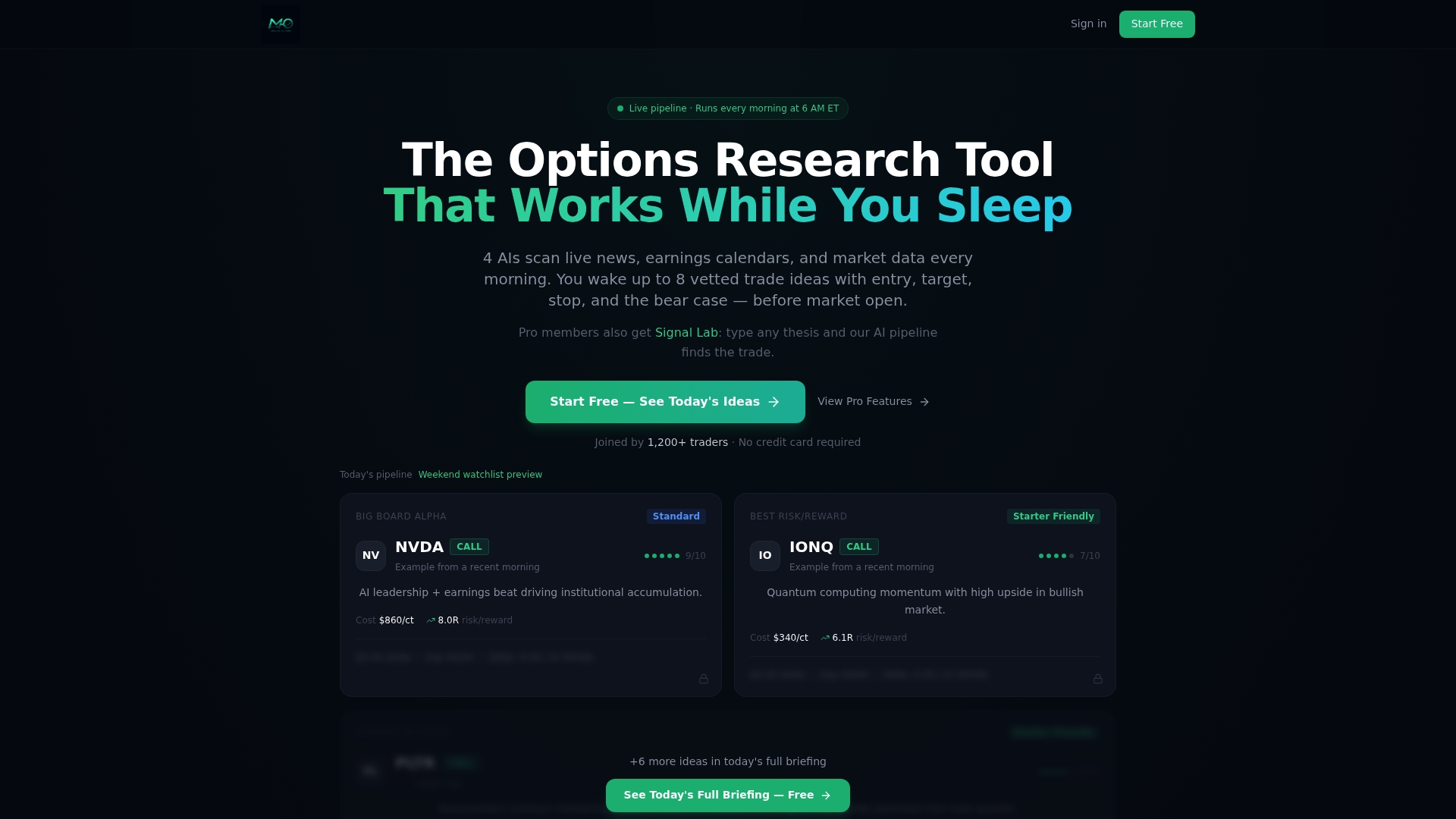
The free daily briefing covers the day's top setups, and the Pro tier at $89/month adds a lunchtime scanner plus an AI chat scanner for researching any ticker on demand. If you're tired of guessing which strike actually fits your thesis, check today's briefing at Morningoptions and see what a vetted single-leg idea looks like before the opening bell.
Sources
This article is general information, not a substitute for advice from a qualified financial advisor. Consult a qualified financial professional about your own circumstances before acting on anything here.